Monday, April 22, 2019
Selecting the Right Influencer Campaigns - Part 3 of Influencer Marketing for Brands
Thursday, January 3, 2019
Measuring Your Influencer Marketing - Part 2 of Influencer Marketing for Brands
What's your goal for influencer marketing?
Generate awareness, drive sales, build loyalty, create an advantage over your competitors? Here's one that you might not immediately consider, but should be a major key for partaking in influencer marketing - generating content that you otherwise might not be able to due to budget, talent, or limited resources.And what about product improvement or development? These are people tuned into what is trending, so their feedback can help your product research. A case study presented in Adweek's Sound Influencer Marketing Webinar indicated a company that had a lot of success sharing product information under an NDA (which I'll get to in a future post) before it hit the market to get useful feedback. While I haven't run any specific research, the insights from what influencers are asking for and feedback to products I share that might work for their project but haven't yet hit the market has been very useful to our product development. You don't have to pick just one of these goals, and different influencer campaigns might focus on one goal while others do another.
As for that competitive advantage, you might consider (but not really measure) how by choosing to go with an influencer you have boxed out the opportunity for your competition to be present in that space. Not a great strategy, but a nice added value to consider as you plan campaigns and what products you might push.
How will you measure your goal?
Reach/Impressions
Reach, impressions, and views make for an easy metric to request. Unfortunately, most everyone who has completed my influencer request form confuses hits and impressions with their follower count. Anyone with a social account knows that your individual posts do not reach your entire audience, not even with some advertising dollars behind it. Requesting screenshots (and some of the more professional influencers do this without even asking) could help keep people more honest, but gaming the system is still a problem with these metrics, as mentioned in Tara Hunt's post Impressions, Reach, Views and Clicks are BS Metrics and I touched on back in 2012 specifically tied to some Facebook advertising I was doing. While Tara Hunt speaks to generating leads based on quality instead of quantity, these are universal metrics, as she puts it "everyone is in on the view/click/fraud scandal," that make them easier to measure and benchmark, especially if your goal is awareness. But consider some of the less easy ways you can indicate awareness and even loyalty.Since starting influencer marketing, predominantly with campaigns on Instagram, our followership grew 340% in a year - that is continued brand awareness potentially leading to loyalty of highly engaged followers we've acquired. But not all of that growth is completely attributed to influencers as social ads and a strategic theme played a role, which makes it a bit tougher to attribute following increases and engagement. It's great though seeing a whole bunch of new followers in your notifications to see shortly before an influencer posted something.
Website Traffic and Conversions
Although traffic can go back to some of that scandal mentioned in the previous metrics, pairing it with other metrics, like bounce rate and pages per session can help determine quality traffic. However, this isn't as easy to measure as asking for a screenshot of social post insights. While you could rely on digging through your referral traffic, it'd be better to add query parameters to specifically track the clicks as part of an influencer campaign, because (hopefully) your influencer has already talked about you in the past so you want to differentiate that from the sponsored content. As I've found, even some bloggers that have been in the business for some time don't understand query parameters for tracking the links from their site, so it requires coaching here. Try not to dictate how they mention your brand for authenticity, so give them a few links, like your homepage, specific products, or categories with proper link tracking for your analytics tool.Text link tracking is already established in an affiliate program. If you are able to work with well established industry content publishers through affiliate, like Buzzfeed or industry publications, you'll get much more traffic than a personal blog or social profile. The problem with going more towards an affiliate method to accomplish this is you won't likely get rights to their content for your use beyond sharing. Additionally, the downfall of clicks is that changes in the way cookies are collected, device switching, and omnichannel strategies mean you can easily lose track of a user after their initial visit, especially when the visit is initiated from a mobile app, like Instagram, and if your conversions typically happen on desktop.
Remember to understand what goal you want to accomplish with each campaign and balance building those quality relationships Tara Hunt talked about with the massive reach of a popular content creator, because building a relationship with an influencer really does both for your brand.
Sunday, December 2, 2018
Influencer Marketing for Brands
Over the past year as I've developed an influencer strategy and process for my company, I felt as though the only advice I could find were blog posts coaching potential influencers on how to get started. When I did come across pieces on brands using influencer marketing, they seemed as though they were written by influencers (highly likely as many influencers got their start in blogging). These pieces only explained all the benefits of influencer marketing and made influencers out to be golden children - what a privilege it is for a brand to work with influencers and that the brand should make all sorts of concessions for these opportunities. These types of pieces seem to fuel some entitlement that exists within the community that gives the really good influencers a very bad name. With multiple requests from different influencers per week, its not like there isn't another opportunity for the brand right around the inbox.
While it surely takes a load of confidence to be able to be successful as an influencer, at a company with higher end items and in an industry that is driven by projects that take at least weeks but usually months to plan and complete, the company has so much to lose. I can't treat every opportunity as a golden child, and they definitely aren't all so grand.
The Dreaded Email Blast Template
I imagine many people who work in influencer marketing have been around media relations in one way or another and know the first rule of that is to personalize your emails to the reporter. The same goes for influencer marketing requests (whether influencer to brand or vice versa). Influencers failing to swap out brand's name in their template is a clear indicator they don't know the brand. How can you be a brand advocate in that case? In many instances, the ones that know the least about the brand have been the most persistent. When one who had failed to swap another brand's name in their email kept persisting (three or four somewhat begging emails), I was a bit more blunt in saying it would not be happening versus my usual, kinder "not at this time" response. Maybe should have told them about their failing to simply indicate they even knew who they were actually talking to so they would see the fault was their own and not make that mistake with others. Instead I got one more email back declaring how rude I was and that they'd never be purchasing anything from the company (this time actually using our company name!). Let's be real; they didn't intend to purchase anything anyways. That was one of my first sour responses and a very real look into some of that entitlement that is out there.
Minors
It can be hard to tell who you are talking to sometimes, especially through DMs. After scrolling a feed for quite some time to determine the authenticity, I came across a personal post that revealed the account owner and person requesting product was 14. While my company has decided we wouldn't partner with minors, your company might benefit from that. Keep in mind that negotiating and contracting would require some special treatment in those cases. Consider if that is something you want to do and then watch out for those cases. If you also don't want to go down that path, add a clause in your agreements that the person signing it represents they are of legal age.
The Ridiculous Ask
My first "big girl" job I was exposed to the "your emergency is not my priority" phrase, and it has always stuck with me. Unfortunately, we can't always live that way in our work life, but for those asking for free (again high dollar value items!) product with some outrageous timeline, I definitely take that phrase to heart. Eventually, I put a disclaimer in our partnership inquiry form that any request without a minimum of a month before the influencer needs product will not be considered. Many times our items ship freight, which when shipping across country requires about two weeks for delivery, and that doesn't include the time to review the request, check sources, and then negotiate terms. I do make exceptions for media that requires filming as they clearly have strict deadlines, but sometimes we just can't make those happen either.
The Third-Party Influence
The really good influencers get shares and mentions from publications. You will see that they regularly are selected as a contributor or know how to pitch to the media to get included. The not-so-great influencers will try to bank on a third-party to ramp up their reach numbers. Sometimes this comes in the form of claiming they will be doing a take over of another account that has a larger following, are working with a reporter for this specific project, or are a founder of a company and will be using those company accounts to push their personal project. These COULD be really good opportunities, but you must tread lightly. Have the agreement signed off by any account owners claimed in the accounts posts will be shared. Set terms that you will be happy with if the publication falls through or have a clause for payback of some sort if that were to happen.
Briefly mentioned in all of these points, I note different ways to combat some of these issues in vetting and negotiating. First off, do you have a template for requests to get as many details as possible covered before going too far down a path? Secondly, are you putting together agreements? If not, well hang tight, because my next few posts will cover those topics!
Tuesday, November 27, 2018
What Has Changed in Digital Marketing the Past 5 Years?
With this new experience, it has been quite fun resurrecting my blog and analyzing everything that has happened as predicted, totally changed, or didn't even exist from my previous posts 5 years ago. Let's have a little review.
The Four Vices of Social Media
Unfortunately, nothing has changed here just even more of it happening and even worse.The Great Native Advertising Debate
You guys ... I'm quite certain I invented influencer marketing AND also helped Instagram's monetization strategy (ads started rolling out in November 2013 [my post was in January 2013] ... and I'm still waiting on my checks) all in this post. Since I am basically the founder of influencer marketing, be sure to check back to my blog for a series on just that.Something that has changed quite a bit in the aspect of "native advertising," a term not really used much anymore (got to love trendy buzzwords everyone wants to optimize on that fall out), is that much of this in the publication space is now handled through affiliate marketing partnerships. Thus, I spun up a top-of-funnel affiliate channel strategy, which has opened up these opportunities for large digital publishers, like Buzzfeed and Clique Brands.
WDF*P*IDF ... WTF?: A lesson in search engine optimization
- E.A.T - expertise, authoritativeness, trust.
- Y.M.Y.L - Your Money or Your Life.
Oh Search, It Is A-Changing
The Elusive ROI of Social Media
Wednesday, October 9, 2013
The Elusive ROI of Social Media
Google Analytics has recently made it even easier to measure it. I promise.
Rather than seeing traffic sources you can now see "Acquisitions." Upon clicking on that head to "Channels" where your view should default to the default channel grouping. These are your sources such as, organic search, direct traffic and what do you know SOCIAL!
When you click on the social grouping you will see this beautiful table below.
- Set up your goals
- Apply a value to each
- Take your "goal value totals" - "your costs for social media (salary/rates for a community manager maybe, social ads, etc)"/"cost"
VOILA ... you have social media ROI!
Ok, Maybe It Isn't That Easy
Tuesday, October 1, 2013
Oh Search, It is A-Changing
Do you remember a time when you may have put in a search term like "rain bucket" and gotten search results that didn't necessarily speak to a bucket that catches rain but maybe one or the other? So then you try different words, variations on phrases, etc? And how about trying to just find a number to contact someone about buying a rain bucket? Oh how far search has come.
Search is Smarter
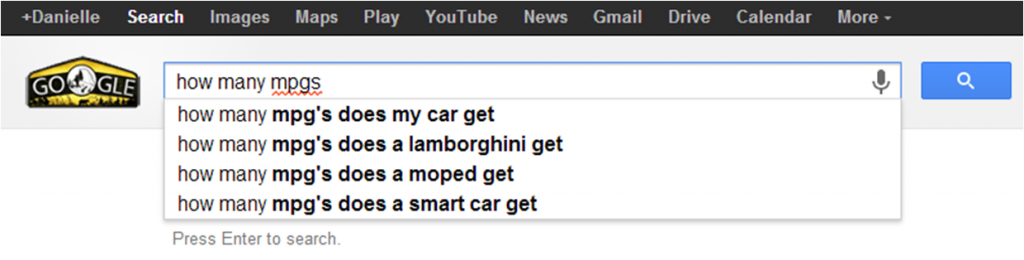
With technology like that which built Watson - the computer that defeated some champions at Jeopardy!, the way Google performs has changed too. First came the knowledge graph and just recently announced is Hummingbird. Which according to this piece in the New York Times, the changes made for Hummingbird are because "Google users are asking increasingly long and complex questions and are searching Google more often on mobile phones with voice search."Thanks to those lovely Apple commercials featuring some of our favorite celebrities and Siri, we expect to ask a question and get an answer. Rather than asking for a specific make and model of car and then finding what looks like a reputable site to find out the MPGs, we simply ask "how many mpgs does [insert make and model] get." (Maybe one day Google will even be able to pull up your actual car if you enter the first search phrase listed in the picture above - creepy but not likely very far off with the amount of data it collects on us).
Google says marketers only need to stick to original, high-quality content for SEO efforts with Hummingbird.
Search is More Efficient (sort of)
Monday, September 23, 2013
WDF*P*IDF ... WTF?: A lesson in search engine optimization
When you think of SEO do you think of backlinks and/or keywords? I did back when I first got a lesson on SEO in March of this year. Keywords, backlinks and keyword density (indicated as the formula WDF*P*IDF or within-document-frequency's correlation to number of instances of a keyword in all other relevant documents in the underlying database) were big chunks in the SEO ranking factors. Not a bad mix of off-page (backlinks) and on-page (keywords) factors. But then Penguin 2.0 came out in May and Panda has been updating pretty regularly.
Google Takes Care of Google
Remember all those jokes about Google+ only being for Google employees? Well joke is on all of us.
From this great graph in Search Metrics "SEO Ranking Factors - Rank Correlation 2013" (released June 20, 2013) it is pretty plain to see that social (in the orange) has a much higher impact than most other backlinking and all on-page factors. And surprise, suprise Google+ is numero uno!
Back to that nofollow tag though, it is right up there above all of the on-page factors now too.
What Can I Do?
- Have your social profiles linked on your website
- Use Google+
- Use Google Places for Business
- Continue getting your website listed (with the appropriate nofollow tag) on relevant sites that have similar or slightly higher ranking than you.
- Pay attention to your review sites! Don't be shady and start buying up reviewers (Yelp is already on to you). Believe me it will happen, and Google will have to change all their algorithms again. If you are that shyster that causes the next "Google Killed PR" debacle, every person in SEO will hate you. Don't be the SEO shyster.